Home / Notes
Section 07 · field notes
Field notes from running on-site jersey personalization.
Written for the person who has to buy this and defend the decision internally. No inspiration, no trend pieces — just the operational detail that changes an outcome.
Posts7.1
How to hire a jersey personalization vendor
Hall rules, in-booth queue containment, a written name policy, and why pressing has to happen before the autograph.
How to hire a jersey personalization vendor
The nine questions that separate a crew who has run the line from a print shop with a press in a van. Includes what a comparable bid must break out and the answers that should end a conversation.
Name and number application on site: the spec
What actually belongs in a written personalization specification — character ceilings, numeral geometry, registration references, colorways, and the acceptance criteria a QC pass is measured against.
Handing over jerseys you already own
A practical checklist for shipping a garment lot to a vendor: sample selection, packing lists, counting protocols, damage terms, and what should come back to you at teardown.
Roster or walk-up: choosing an intake model
The upstream decision every other question depends on. How each model is staffed and queued, what each one costs you in throughput, and the mixed run most events actually need.
Personalization inside a retail pop-up
Borrowed space, venue rulebooks, nightly teardown, no stockroom, and an uneven size curve by day three. What a temporary residency changes about the build and the quote.
Quality control on name and number application
First-article approval, the per-unit check list, how straightness is held rather than judged, the reprint policy, and what the end-of-day report should contain.
Why the first three7.2
Almost every problem we are called in to fix on a personalization job traces back to one of three gaps, and each of the first three posts above closes one of them.
The first is buying on the wrong criteria. Equipment lists look comparable across vendors and tell you almost nothing. What separates a crew who has worked a live queue from a shop with a press in a van is process — where intake happens, how work is distributed across lanes, what the operator-to-press ratio really is. Those are interview questions, and most buyers do not know to ask them.
The second is an unwritten specification. Character ceilings, numeral geometry, registration references, and acceptance criteria feel like details until an operator has to interpret one of them with a guest waiting. A single page, taped to the queue board, prevents nearly all of it.
The third is custody. The moment your jerseys leave your building, a purchasing decision becomes a chain-of-custody problem: samples, packing lists, counts in and out, damage terms, and the export you will want three months later when someone questions a budget line.
None of this is exotic. It is just the part nobody writes down, which is why we did.
These are written from the vendor side, deliberately. You will find plenty of advice about how to make an activation feel exciting. What is harder to find is a straight account of what the person operating the press actually needs from you, and what you should be able to demand back from them in writing. That is the gap these three are for.
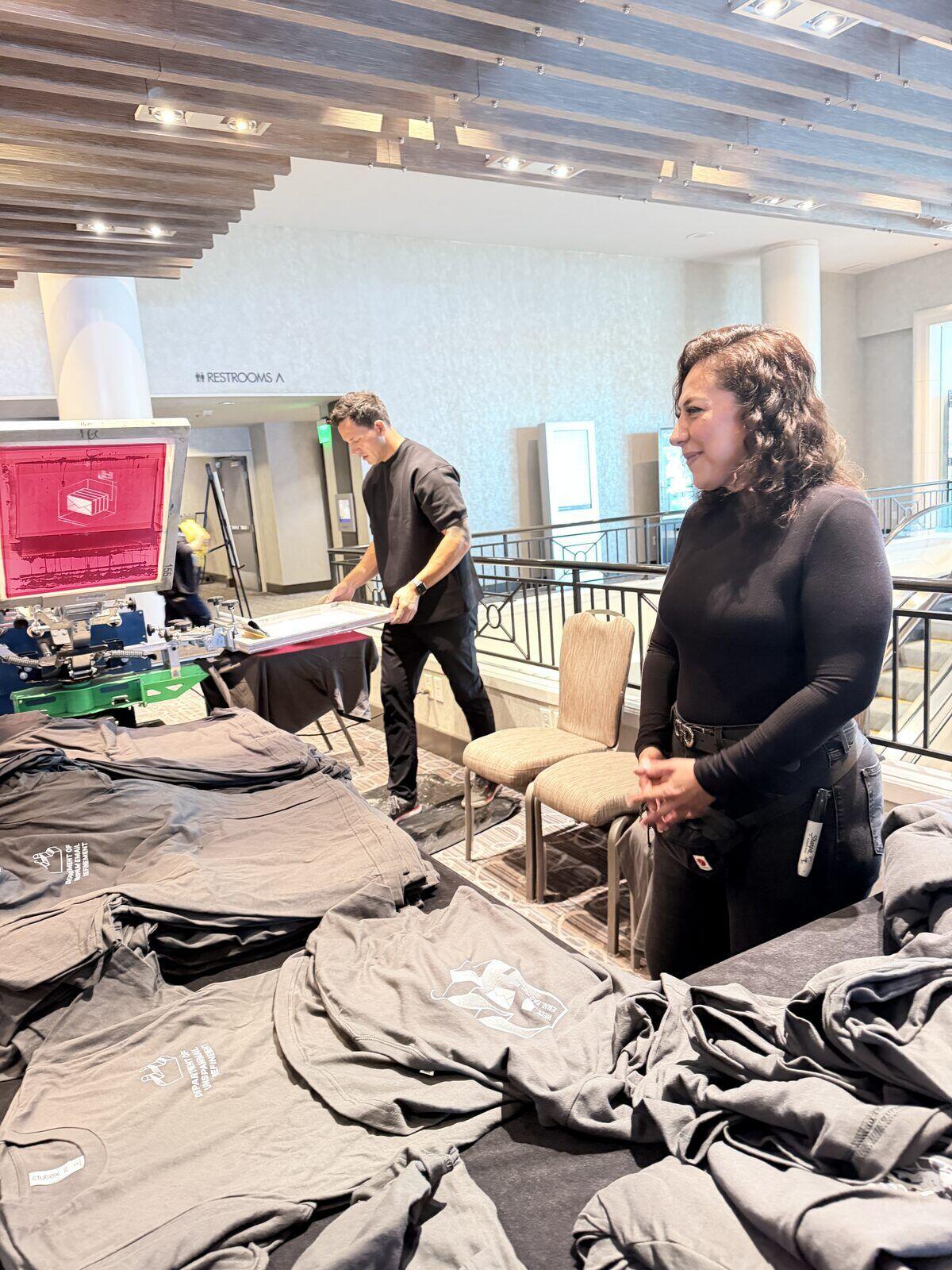
Reference pages7.3
- Scope of work: methods, stock, crew, and the rest of the truck→
- Pricing inputs and what a written quote contains→
- Four deployment profiles and the lane math behind them→
- Heat-applied numbers: numeral spec, press variables, and registration→
- Direct answers on cost, throughput, and liability→
- Damage, spoilage, and replacement terms on client goods→
- Matching a team font, marks, and colors→
Next step
Reading because you have a job to place?
Send garment source, unit count, venue, and hours on the floor. We reply with lane count, crew size, and a written figure.