Home / Scope
Section 01 · scope of work
What an on-site jersey personalization vendor is actually responsible for.
Equipment, consumables, labor, layout decisions, quality control, and the paperwork at the end. Below is the full list, written the way a procurement file wants to read it.
Application methods1.1
DTF transfer + heat press
Full-color direct-to-film transfers pressed onto the garment. This is the default because it holds on slick, textured, and mesh polyester — the fabrics almost every modern jersey is cut from — and because a press cycle is short enough to keep a live lane moving. Color is unrestricted, so a two-tone outline number or a sponsor mark costs no extra pass.
Twill and tackle twill
Cut letters and numerals applied with heat-activated backing and, where specified, stitched down. Chosen when a program wants the weight and shadow of a traditional jersey back. Slower per unit and requires the letter kit to be cut ahead of the date, so it suits roster runs more than open walk-up lines.
Embroidery
Stitched names and small marks, typically on chest, sleeve, or a hat running alongside the jersey lane. Beautiful and durable; measured in minutes per unit rather than seconds, so we run it as a companion station with its own expectation set rather than as the main line.
How we choose
If the deliverable is a personalized jersey in a guest's hands before they leave the footprint, the answer is press application. Twill and embroidery are specified when the garment is a keepsake or a uniform that will see a season of washing, and when the schedule allows the slower cycle.
Letter and number stock, layout, and limits1.2
A jersey back is a fixed canvas. The number owns the middle, the name arcs above it, and both have to clear the shoulder seams and the collar taping. That geometry is what produces the character limit everyone eventually runs into.
We cap names at roughly nine characters. Beyond that, the letters have to be tightened or scaled until the name stops looking like it belongs on a jersey and starts looking like it was squeezed in. Numbers run one to three digits. If a program has genuinely long surnames, we will look at a two-line treatment or a smaller name height ahead of the date — but we settle it in the layout file, not at the counter with a guest waiting.
Typeface is set per program — supplied from your brand kit or picked from a short menu. Once approved, the layout is locked into the intake tablet so every ticket produces the same geometry. What we need to match your team font and colors →
Layout specification
- Name characters
- ~9 max
- Numerals
- 1–3 digits
- Print locations
- Back / front / sleeve
- Color
- Full color, no per-color surcharge
- Typeface
- Client kit or menu, locked pre-event
- Registration
- Set from collar and side seams
Handling customer-supplied goods1.3
Before the date
Send two or three sample garments from the same production lot. We run a heat test to find the temperature, dwell, and pressure the fabric tolerates, and we check for dye migration and sublimation ghosting. Polyester is not one material — two jerseys that look identical can behave differently under a platen because they came off different mills.
The test result becomes part of the run sheet, and if a lot is a genuinely poor candidate we tell you before you ship a pallet instead of after.
On the day
Goods are counted in against your packing list and counted out at teardown. Units are staged by size and colorway so a lane never hunts for a garment. Anything we damage in application is documented and reported the same day — we do not quietly bury a scorched jersey in the bottom of a box.
Unpersonalized surplus goes back to you in the cartons it arrived in, with a count that matches the sheet.
Sourcing instead
If you would rather not own the inventory, we source blanks. Augusta Sportswear and Badger are the usual jersey lines; Bella+Canvas 3001 and Gildan cover tees running alongside; Richardson 112 and Flexfit cover caps. Sizes stock adult XS–3XL and can be capped per size so a sold-out size disappears from the picker instead of disappointing someone at the counter.
Crew, equipment, and the rest of the truck1.4
Staffing scales at roughly one press lane and one operator per station. Two to four lanes covers most deployments; large activations scale further. Every build gets a crew lead who owns the queue board, the QC pass, and the conversation with your venue contact.
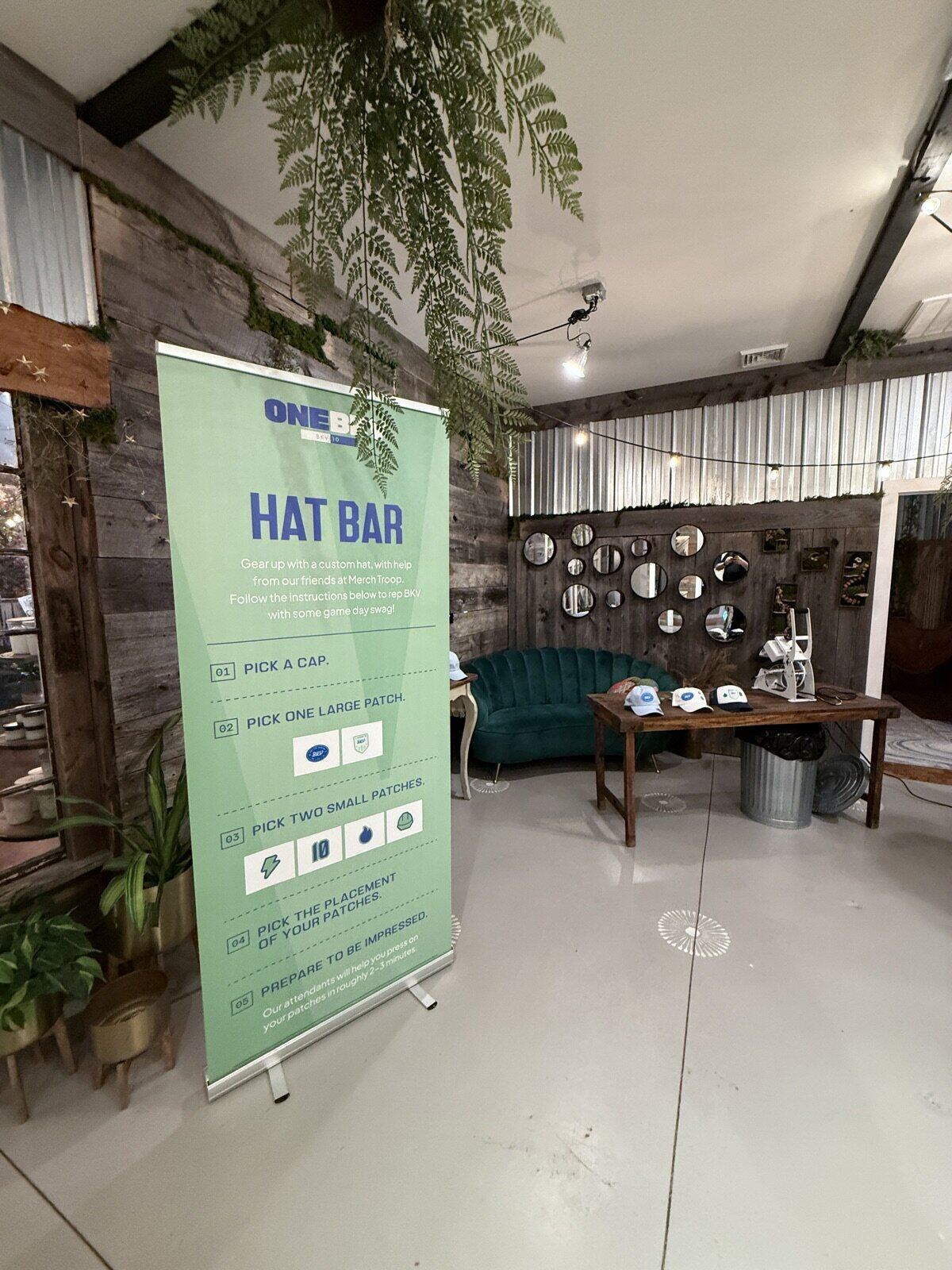
The same crews run the rest of the Merch Troop menu, which matters when a jersey line is one element of a bigger footprint: live DTF pressing on tees and hoodies, screen printing, embroidery, a hat bar with patch application, laser engraving, and UV DTF stickers. If your build wants a jersey lane and a cap lane sharing one back-of-house, that is one mobilization and one crew, not two vendors negotiating table space.
- What drives the number on a jersey personalization quote→
- Deployment types we are booked for→
- Realistic throughput per lane, per hour→
- Heat-applied numbers: numeral spec, press variables, and quoting inputs→
- Damage, spoilage, and replacement terms on client-supplied goods→
- The quality control standard every unit is measured against→
Next step
Have a garment lot and a date? Send the specs.
Send garment source, unit count, venue, and hours on the floor. We reply with lane count, crew size, and a written figure.